Where Things Stand: The Deal That Won't Quite Close
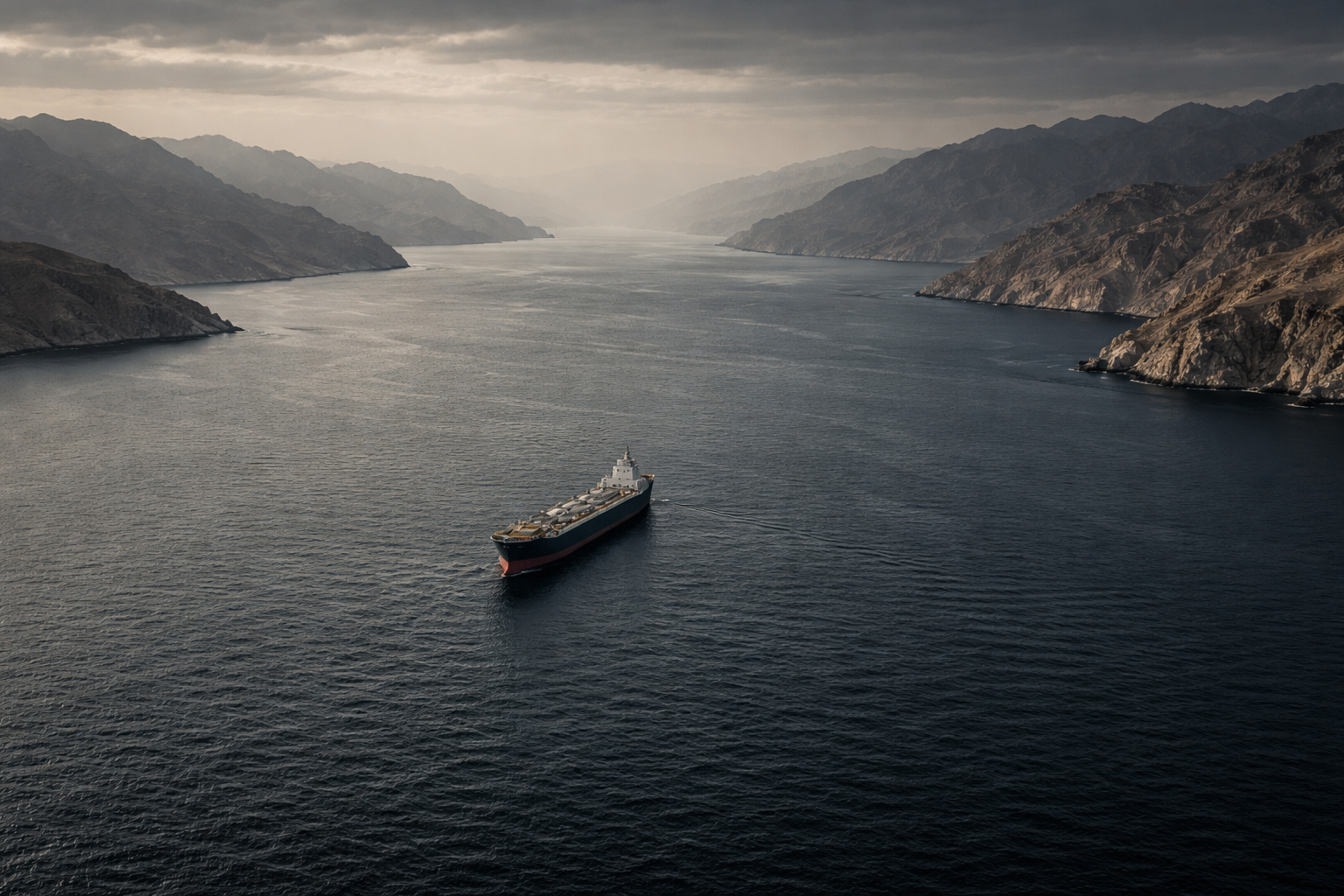
It has been 101 days since the Strait of Hormuz closed. Negotiators reached a tentative agreement nearly two weeks ago. Trump said it was "largely negotiated." Pakistan's mediators described talks as "generally positive." Markets priced in a deal — the Dow hit 50,902, the S&P 500 reached 7,594, oil fell toward $95.
The deal is still not signed.
This is the moment to step back from the daily rhythm of updates — the Truth Social posts, the Iranian state media denials, the "significant progress but not final progress" briefings — and explain clearly why the agreement that is so close keeps not closing. Not because the parties are acting irrationally. But because the gap that remains is genuinely hard, and the two sides' core interests may be structurally incompatible on the questions that matter most.
What Is Actually Agreed
It helps to start with what is settled, because there is more consensus than the daily noise suggests.
Both sides have accepted the broad architecture of a 60-day framework. During that period: the Strait of Hormuz would reopen with no tolls and no harassment of commercial vessels. Iran would clear the mines it deployed within 30 days. The US would lift its naval blockade of Iranian ports proportionally as shipping resumes — Trump's "relief for performance" principle. Iran would be able to sell oil freely under sanctions waivers. And both sides would use the 60 days to negotiate a more permanent settlement covering Iran's nuclear programme.
That framework is not in dispute. The UK and France have finalised mine-clearing mission plans ready to deploy within days of a signing. Insurance markets are watching for the signal. Prediction markets put the probability of a deal by June 30 at 43% — pessimistic, but not hopeless.
The problem is not the framework. The problem is two specific issues that sit inside it — and one structural problem that sits underneath both of them.
The Two Issues That Won't Close
Issue One: The enriched uranium stockpile.
Iran currently holds more than 400kg of uranium enriched to near-weapons-grade — a stockpile that did not exist at anything like this level before the war. Trump has demanded it be "DESTROYED" — his capitalisation. Not transferred to Russia, not stored under IAEA supervision, not shipped to a third country. Destroyed.
Iran's position is that its nuclear programme is an inalienable right and that the uranium question is not part of the initial MOU — it belongs to the 60-day negotiation phase that follows. Senior Iranian sources told Reuters on June 1 that Tehran has not agreed to hand over the stockpile and that the nuclear issue was not part of the preliminary agreement.
The gap between "destroyed before we sign" and "discussed after we sign" is not a drafting problem. It is a fundamental disagreement about sequencing and leverage. If the uranium is destroyed before a deal, Iran loses its most powerful deterrent. If it is discussed after a deal, the US loses its primary leverage for nuclear concessions. Neither side is being irrational. Neither side can move easily.
Issue Two: Who controls the Strait of Hormuz.
Iran's ISNA news agency reported this week that a plan "to implement Iran's management and sovereignty over the Strait of Hormuz" is being prepared for parliamentary approval. Iran's Fars news agency says no "toll-free" clause appears in the actual text of the agreement — contradicting the US account directly. Iran's foreign ministry has repeatedly stated that any transit arrangement must be agreed between Iran, Oman, and the bordering countries — and that the United States "has nothing to do with it."
Washington's position is the mirror image. The MOU, as described by US officials, makes clear that Iran cannot impose tolls and that transit will be unrestricted. Trump has said the strait is "international waters" — a claim that is legally contestable, since most of the waterway lies in Iranian and Omani territorial waters.
This is not a new gap. It has been present since February 28. Every ceasefire that has collapsed, every deal that has been announced and then disputed, every round of "significant progress" followed by "sticking points remain" traces back to this single unresolved question. It was not resolved in the tentative agreement. It has been deferred — which is not the same thing.
The Structural Problem Underneath Both
Bloomberg's assessment from June 5 cuts to the heart of why these two issues are so hard to resolve: "The US and Iran have been locked in a stalemate since agreeing to a ceasefire in April. They've been unable to reach a deal to end a monthslong war that has killed thousands of people and sparked a global energy crunch. Tensions are high as Iran maintains a tight grip on shipping through the Strait of Hormuz and the US refuses to lift its naval blockade on Iranian-linked vessels."
That description captures the structural trap both sides are in. Iran's leverage is the strait. The US leverage is the blockade. A deal requires both sides to give up their leverage simultaneously — or in a carefully choreographed sequence that neither side fully trusts the other to honour. Axios reported in late April that there is "no consensus inside the Iranian leadership about how to address US demands" — meaning even if Araghchi wanted to close the gap, he may not be able to deliver the IRGC hardliners who control the physical levers of the crisis.
King's College London's Andreas Krieg described the situation accurately in May: "The balance of deterrence is currently skewed in Iran's favour." Iran knows it. Washington knows it. And the IRGC hardliners who are preparing a parliamentary vote on strait sovereignty know it most of all.
What Has Changed Since the Three-Month Mark
Three weeks ago this blog published its three-month retrospective. Since then, several things have shifted — not enough to close the deal, but enough to change the shape of the problem.
Israel has re-entered the picture. Israel and Iran traded strikes on June 8 for the first time since the April ceasefire — a significant escalation that complicates any US-Iran framework. Any deal Washington signs that doesn't address Israel's four red lines — enrichment infrastructure, missiles, proxy militias, and legitimacy — risks being immediately undermined by Israeli action.
Iran has hardened its institutional position. The planned parliamentary vote to enshrine Iranian sovereignty over the strait is not just rhetoric — it is an attempt to lock in the IRGC's maximalist position before any negotiator can compromise it away. If it passes, it removes diplomatic flexibility at exactly the moment negotiations need it most.
Trump's domestic position is shifting. His Cabinet meeting comment that Iran is "negotiating on fumes" and his dismissal of the idea that the war betrays his "no new wars" campaign message both suggest a president feeling political pressure but unwilling to show it publicly. The Fed's signals on potential rate rises — driven by Hormuz-related inflation — are adding economic urgency that his Truth Social posts don't acknowledge.
The Polymarket number tells its own story. A permanent peace deal by June 30 stands at 43%. That is not a collapsed probability — but it is a long way from the near-certainty that markets were pricing two weeks ago when the Dow hit records on deal optimism.
The Three Scenarios from Here
Scenario 1 — The deal closes in the next two weeks. Trump accepts that uranium destruction is a 60-day negotiation item rather than a pre-signing requirement. Iran accepts toll-free language in the MOU text in exchange for the US acknowledging Iranian coordination rights over transit. Both sides sign, mines are cleared, the Northwood coalition deploys, and the strait begins to reopen. This is the 43% scenario.
Scenario 2 — Protracted stalemate through the summer. Neither side blinks. The parliamentary sovereignty vote in Iran passes, hardening Tehran's position. Trump's domestic pressure mounts but not enough to force a concession on uranium. The ceasefire holds in name, both sides continue trading strikes, and the strait remains effectively closed through July. Inflation continues to rise. Bond markets reprice. The economic damage compounds. This is probably the 40% scenario.
Scenario 3 — Collapse and escalation. Iran's parliamentary sovereignty vote triggers a US ultimatum. The ceasefire breaks down entirely. Operation Epic Fury resumes at the "higher level and intensity" Trump has threatened. The strait closes completely. Oil spikes past $120. This is the 17% scenario — low probability, catastrophic consequences.
The Bottom Line
The deal is real. The gap is also real. And the gap is not, despite what two weeks of "largely negotiated" briefings might suggest, a matter of drafting. It is a matter of two sides who have fundamentally different answers to the two questions at the heart of this crisis: who controls the Strait of Hormuz, and what happens to Iran's enriched uranium.
Until one or both of those questions has a genuine answer — not a deferred answer, not a 60-day-window answer, but an answer — the deal that negotiators have agreed will remain the deal that leaders haven't signed.
One hundred and one days in. The strait is still closed. The world is still watching.
See the numbers in real time
Track oil prices, ship transits, insurance premiums, and strait status — updated every hour.