Three Months That Changed Everything
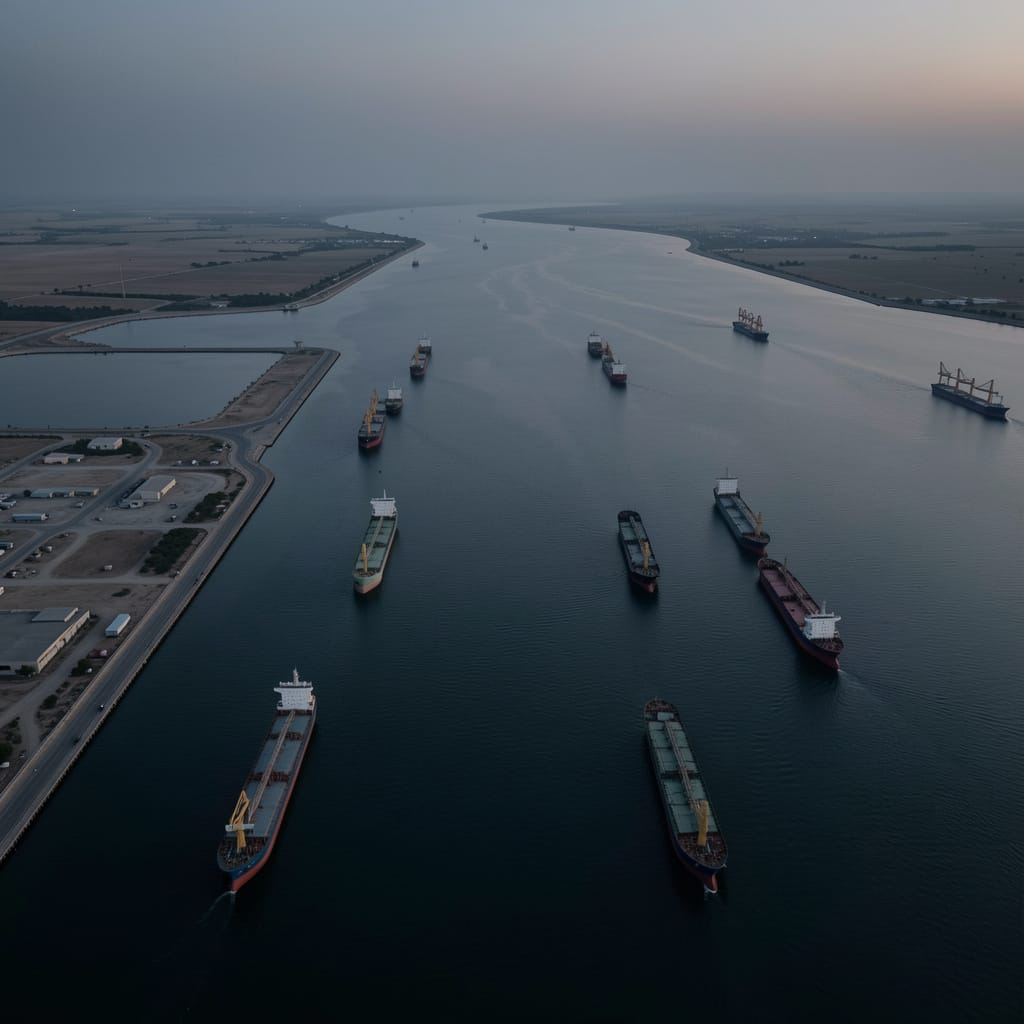
On February 28, 2026, the United States and Israel launched strikes on Iran. By nightfall, Iranian forces had declared the Strait of Hormuz closed. Most analysts expected the crisis to last days, perhaps weeks. Markets priced in a brief disruption. Diplomatic sources spoke of a quick off-ramp. The world, in the shorthand of financial commentary, was expected to "absorb" the shock.
Three months later, the strait is still closed. A tentative deal exists at the negotiator level — but neither Trump nor Iran's Supreme Leader has signed it. The US struck Iran yesterday "because Trump had a feeling." This morning, Trump threatened to bomb Oman, the country whose territory forms half the strait's southern shore and whose diplomats have been the indispensable back-channel for every serious negotiation of the past ninety days.
This is a good moment to stop and take stock. Not of what happened — the timeline page covers that — but of what the crisis has actually taught us. What did everyone get wrong on day one? What does three months of watching this crisis tell us that the daily news cycle missed? And why, despite everything, is the fundamental question still unanswered?
What Everyone Assumed on February 28
The consensus on the morning of March 1, 2026 rested on three assumptions. All three were wrong.
Assumption one: the strait would reopen quickly. Military analysts across Washington think tanks and European foreign ministries broadly agreed that Iran would use the closure as leverage — a dramatic opening gambit designed to force rapid concessions — but that the combination of US military pressure and economic pain would produce a deal within weeks. The IEA had contingency plans for a two-to-four week disruption. Strategic petroleum reserves were designed for exactly this scenario.
What actually happened: ship transits fell from around 130 per day in February to just 6 in March — a 95% collapse — and have not recovered. The cumulative supply disruption has exceeded 500 million barrels, making this the largest energy supply disruption in the history of the global oil market. Larger than 1973. Larger than 1979. Larger than 1991. And still ongoing.
Assumption two: military pressure would force Iran's hand. Operation Epic Fury struck approximately 6,000 targets across Iran in its first weeks. The logic was straightforward: enough military pain, and Tehran would negotiate. Iran's nuclear facilities, IRGC bases, missile infrastructure — all struck. The assumption was that Iran's threshold for pain was lower than its threshold for humiliation.
What actually happened: the IRGC kept fighting. Not because Iran was unaffected — it was devastated — but because the Revolutionary Guard's calculus was never primarily economic. Control of the strait is the IRGC's most powerful strategic asset, and surrendering it under military pressure would undermine the very foundation of their institutional power. You cannot bomb an institution into abandoning its reason for existing.
Assumption three: a deal would be simple. Two parties, one waterway, one shared interest in avoiding catastrophe. What could be complicated? The deal structure seemed obvious from day one: Iran reopens the strait, the US stands down, nuclear talks follow. The framework was clear.
What actually happened: the deal that seemed obvious on day one is still unsigned on day ninety. Not because of bad faith — though bad faith has played its role — but because the two sides have fundamentally incompatible definitions of the single most important question: who controls the Strait of Hormuz? The US says it is international waters and nobody controls it. Iran says most of it is Iranian and Omani territorial water and Iran controls it. Trump said both things this week, sometimes in the same sentence. That gap has not closed. It has not even narrowed.
The Five Things Nobody Predicted
Beyond the three failed assumptions, the past three months have produced five developments that virtually nobody saw coming on day one.
One: the mine campaign. Iran's decision to lay mines in the strait — twice — transformed the crisis from a political standoff into a physical infrastructure problem. Mines do not respond to ceasefires. They do not care about diplomatic frameworks. They sit on the seafloor until someone finds them, and finding them in a contested waterway is slow and dangerous. The mine threat is the reason a signed deal would not immediately reopen the strait — and the reason the recovery timeline is measured in months, not days.
Two: Gulf allies vetoing US strikes. Saudi Arabia refused to allow US forces to use its airspace for Project Freedom. The UAE and Saudi Arabia jointly called Trump in May and asked him to stand down from a planned major strike. These are countries Iran has been bombing throughout the conflict. Their restraint — their willingness to absorb Iranian attacks and still say "not yet, we think we're close to a deal" — reveals something important about the limits of American power projection in a region where the consequences of escalation land on your allies' doorstep, not your own.
Three: Congress challenging the war. Seven separate war powers votes. Four Republicans breaking with the White House. The Senate advancing a resolution challenging the legal basis of a war Congress never authorised. No president since the War Powers Resolution was passed in 1973 has faced this level of sustained congressional resistance to an ongoing military operation. It hasn't stopped the war — but it has raised its political cost in ways that are visible in Trump's own language. "Hopefully, maybe forever" is not how a president with unlimited options talks about ending a conflict.
Four: China's studied neutrality. China sources 60% of its crude through the strait. It is Iran's most important economic partner. By any rational calculation, Beijing should have been the most motivated actor in the room — more motivated than Washington, more motivated than Tehran — to end the disruption. Instead, China has watched, maintained its Iran oil purchases in defiance of US sanctions, and used the crisis as leverage in its bilateral relationship with Washington. The Beijing summit produced a White House readout claiming Xi offered to broker peace. China's own Foreign Ministry readout mentioned neither Iran nor Hormuz. Two leaders, one meeting, two entirely different accounts.
Five: Oman. On February 28, almost no international coverage mentioned Oman in the context of the Hormuz crisis. Within three months, it had become the most consequential small country in the world. Oman owns the southern shore of the strait. Its diplomats have carried the most sensitive messages between Washington and Tehran. Its foreign minister pushed back on Trump's threat this week with quiet authority. And Trump, apparently unaware of or indifferent to the irony, threatened to bomb the country without whose cooperation no deal is possible and no strait governance arrangement can function. "Oman will behave just like everybody else, or we'll have to blow them up." Not quite sure what that was all about — as Fox News' own anchor put it, live on air.
The One Thing That Hasn't Changed
Amid everything that has shifted — the military balance, the diplomatic landscape, the economic damage, the cast of characters — one thing has remained constant from day one to day ninety.
Iran and the United States cannot agree on who controls the Strait of Hormuz.
This is not a negotiating position. It is not a bargaining chip. It is a foundational disagreement about the legal and political status of a body of water that both sides have defined as central to their national interests. The US position — "it's international waters, nobody controls it" — is legally contestable and strategically untenable as long as Iran's navy is physically present in the strait. Iran's position — "it's Iranian and Omani territorial water, transit requires our coordination" — is legally defensible but strategically maximalist, designed to institutionalise Iranian leverage over global energy flows indefinitely.
Every ceasefire that has collapsed, every deal that has been announced and then disputed, every round of talks that has produced "significant progress" followed by "sticking points remain" — all of it traces back to this single unresolved question. The MOU framework that negotiators agreed this week reportedly resolves it with a 60-day parallel withdrawal — both sides pulling back in synchronised steps. Whether that formulation actually bridges the gap, or simply defers it into the nuclear negotiation phase, is what the next few days will tell us.
The Human Cost That Gets Forgotten
Three months of geopolitical analysis and market commentary has sometimes obscured what this crisis has actually meant for people.
Ship transits dropped from around 130 per day in February to just 6 in March — a collapse of about 95%. At least 17 merchant ships have been damaged, 7 abandoned, 2 captured, and 12 seafarers killed or reported missing.
The ILO estimates that real labour incomes could decline by as much as $3 trillion globally by 2027, with Asia-Pacific and Arab states among the regions most exposed. Under one scenario, global working hours could fall by the equivalent of 38 million full-time jobs by 2027.
The Philippines, which imports 98% of its oil from the Middle East, has been experiencing a full energy crisis since March 24. 3.4 billion people live in countries already spending more on debt than on health or education — and now facing an energy and food price shock simultaneously.
The fertiliser disruption is the crisis within the crisis that will outlast the war itself. Urea prices up 50%. Planting seasons missed. Food price consequences that will compound over the next two to three agricultural cycles regardless of when the strait reopens. The UN World Food Programme has warned of conditions similar to the 2022 food crisis persisting through 2027.
These numbers are not abstractions. They are the measure of what ninety days of stalemate has cost.
What Comes Next — And Why the Next 60 Days May Matter More Than the Last 90
A tentative agreement exists. Negotiators believe they have a deal. The framework is the clearest it has been: 60 days of synchronised withdrawal, the strait reopening in steps, nuclear talks following. If Trump signs it and Khamenei endorses it, the next 60 days become the most consequential diplomatic period of this crisis.
Because the MOU is not a peace deal. It is a framework for negotiating one. The uranium stockpile, the enrichment moratorium, the missile programme, Israel's red lines — none of these are resolved. They are deferred into a 60-day window in which both sides will negotiate under the pressure of the markets, the bond yields, the gas prices, and the 1,600 ships still waiting to move.
Even if the conflict is fully resolved in the coming months, the economic aftershocks will persist for years. A credible five-year recovery timeline is the realistic planning assumption.
Three months ago, the world expected a quick disruption that markets would absorb. What it got instead was the largest energy supply shock in history, a global financial contagion, a humanitarian emergency in the making, and a diplomatic maze that has consumed the attention of every major power on earth.
The deal that negotiators have agreed — if it holds, if the leaders sign it, if the IRGC doesn't lay more mines, if Oman doesn't get bombed — would be the beginning of the end. Not the end itself. The beginning.
That is where we are, ninety days on.
See the numbers in real time
Track oil prices, ship transits, insurance premiums, and strait status — updated every hour.