The Second MOU: Why This One Is Different — And What Happens Next
⚡ UPDATE 2 — August 18, 2026
The 60-day deadline established in the June 17 first MOU expired on August 17 with both sides deadlocked and neither invoking the mutual extension clause. The assessment in this post — "structurally stronger but not structurally sound" — has been validated by events.
The core dispute remains unchanged from the day the second MOU was signed at Versailles: the strait's future administration, the route question, and the frozen funds. Iran's position that Point 5 of the MOU gives it management rights over the waterway was never accepted by Washington, and the 60-day window produced no resolution on that question.
On August 17, a senior Iranian official told Reuters that Iran has decided to shift its policy from defensive to "fully offensive" due to the deadlock. "Iranian entities must be prepared to escalate tensions in the Strait of Hormuz and wider region," the official said, adding that Tehran would conduct "a timely and precise military attack to break the US naval blockade if diplomacy fails." The threat specifically targets the blockade rather than Gulf infrastructure — a calibrated signal directed at the US leverage point rather than civilian targets.
The strait is now operating at approximately 1% of pre-war baseline — effectively zero tankers moving. Gulf allies including Saudi Arabia, UAE, Qatar, Kuwait, and Bahrain are reported to be exploring alternative arrangements, suggesting fractures in the US regional coalition. The US Strategic Petroleum Reserve is approaching its floor trigger.
The second MOU is not formally dead — the mutual extension clause exists and could theoretically be invoked. But with Iran shifting to a fully offensive posture and the deadline expired without agreement, the framework that was described as "structurally stronger" on August 12 has reached the same endpoint as every previous agreement in this conflict.
The Hormuz Strait Monitor will continue tracking developments as the situation enters its next phase.
⚡ UPDATE 1 — August 14, 2026
The formal Geneva signing ceremony scheduled for Friday August 14 did not take place. Iran's Foreign Ministry confirmed the MOU was already signed digitally by both presidents on August 12, making a separate ceremony unnecessary. Negotiating teams travelled to Geneva but in-person meeting plans were paused.
Two complications emerged within 48 hours of the Versailles signing. First, Iran circulated a draft implementation plan for the middle corridor that the US and Gulf states considered too restrictive — the same pattern of disputed interpretation that derailed the June 17 MOU. Oil rose for five consecutive sessions on the news. Second, Iran's hardline Assembly of Experts issued a statement calling the reopening of the Strait of Hormuz "a strategic mistake" and demanding the nuclear programme be kept off the negotiating table. Hardline influencer Ehsan Hosseini posted: "We burned our field achievement of closing the Strait of Hormuz."
Iran's Supreme Leader Mojtaba Khamenei had not signed off on implementation as of August 14, with Iran's Foreign Ministry confirming that implementation requires "a separate decision from senior Iranian leadership." Ship attacks on commercial vessels continued over the weekend despite the signed MOU. GEF live tracker designated Day 167 status as CRITICAL.
165 days after the Strait of Hormuz closed, both presidents have signed a piece of paper to reopen it.
Not negotiators. Not deputy foreign ministers. Not mediators passing drafts between capitals. Presidents. Trump at the Palace of Versailles, telling reporters "It's signed. Signed in Versailles. Just signed it." Pezeshkian separately, posting an image on X calling it "a historic document and a message from a strong Iran."
The first MOU — signed on June 17 — was disputed by Iranian state media within hours and collapsed within weeks. This one is structurally different. Understanding why requires looking at three specific things that changed between June 17 and August 12, and two things that haven't changed at all.
What Is Structurally Different This Time
First: both heads of state signed.
The June 17 MOU was signed at the negotiator level — Vance and Kushner for the US, Ghalibaf for Iran. It was immediately disputed by Iranian state media, with Fars News agency claiming the strait would remain under Iranian management regardless of what negotiators agreed. The IRGC then attacked ships using the Oman-approved route, claiming the MOU didn't authorise it.
This time, Pezeshkian himself signed. That matters because Pezeshkian has been publicly defending the diplomatic track against IRGC hardliner opposition — Al Jazeera reported he has even threatened resignation to combat hardliners who oppose a deal. His personal signature is a signal that the elected government has staked its authority on this agreement in a way it didn't on June 17.
It does not guarantee IRGC compliance. But it removes the institutional ambiguity that the first MOU left open.
Second: the route dispute has been resolved — at least on paper.
The June 17 MOU collapsed primarily because the two sides had incompatible interpretations of which shipping route was authorised. Iran insisted on its northern route through Iranian territorial waters. The US and Oman backed the southern corridor through Omani waters. Iran attacked ships using the southern route, claiming it wasn't permitted under the MOU. The US said it was. Ships stopped moving.
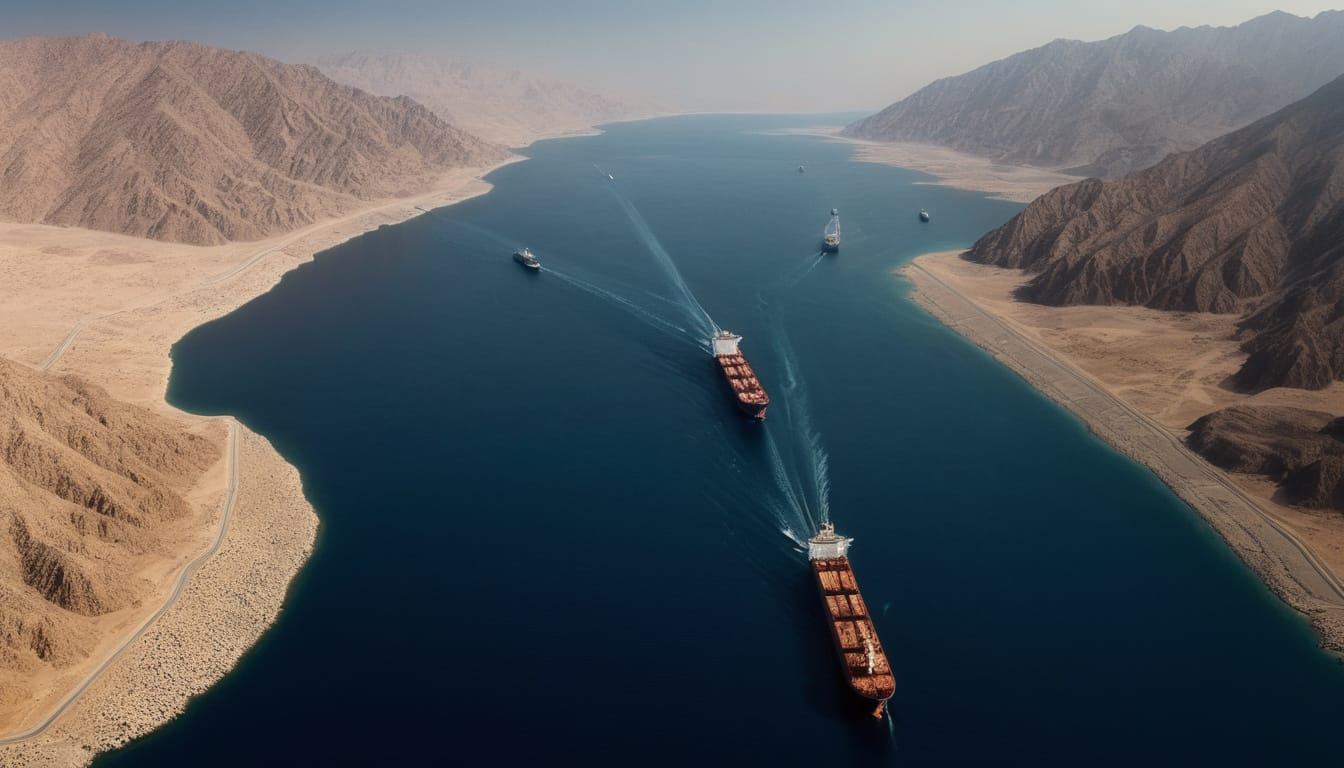
This MOU incorporates the results of two months of Iran-Oman technical talks that specifically addressed the route question. The agreed framework introduces a "middle corridor" — inbound traffic through a northern lane in Iranian territorial waters, outbound traffic through a southern lane in Omani waters, with both coordinated between Iran and Oman.
This is Iran getting the institutional recognition it wanted — ships transiting via the northern route are implicitly acknowledging Iranian management authority — while giving the US and Oman enough of the southern corridor to claim the arrangement is not purely Iranian-controlled. It is a genuine compromise rather than the June 17 framework's deliberate ambiguity.
Third: the US conceded the central question.
"The concession has already been made regarding some form of control over Hormuz," one source told Reuters. This is the most significant single fact of the entire negotiation. For six months, the US insisted the strait is international waters and no country controls it. The August 12 MOU implicitly accepts that Iran has management authority over at least part of the transit process.
Iran's central war aim — which this site identified in the Iran's Endgame post published Monday — was permanent institutional recognition of Iranian control over the strait. It has been conceded in principle. The post-60-day administration process, in which Iran and Oman will "define the future administration" of the waterway, will determine the permanent shape of that concession.
What the MOU Actually Contains
The agreement is a 60-day framework with the following core provisions:
The strait reopens immediately — toll-free passage for 60 days. No Iranian approval required for individual vessels. The middle corridor coordinates are fixed and published.
The US terminates all sanctions — not phases out, not reduces. The MOU language is "terminate all types of sanctions" and make frozen Iranian assets "fully available for use." This is the most significant economic provision Iran has secured — full sanctions relief, not the partial waivers of the June 17 framework.
The naval blockade ends — CENTCOM's enforcement operations cease. The 44 vessels that were redirected under the reimposed blockade can now transit.
A 60-day nuclear negotiation window begins — the hardest conversations about enrichment, the uranium stockpile, IAEA verification, and the ballistic missile programme are deferred into this window. They were deferred in June. They are deferred again now.
Future strait administration — Iran and Oman will negotiate the permanent arrangement for managing the waterway. This is where the fee question, the management authority question, and the long-term sovereignty question will eventually be settled. It is the most consequential unresolved issue in the agreement.
What Is Still Missing
Three significant gaps remain — and they are the same gaps that were present in the June 17 framework.
The enriched uranium stockpile. Iran's more than 400kg of near-weapons-grade uranium is not addressed in the MOU. It is the first item on the 60-day nuclear agenda. Trump demanded it be "DESTROYED." Iran said it wasn't part of the initial framework. That argument is about to begin again.
Iran's ballistic missile programme. Absent from this MOU as it was from the last one. Israel's most urgent red line. Netanyahu's government has not commented on the August 12 signing. Whether Israel treats this agreement as compatible with its security requirements is the most immediate external threat to the framework.
The Lebanon clause. The June 17 MOU collapsed partly because Iran made an end to Israel-Hezbollah fighting a condition of the deal, and Israel kept striking Beirut. The August 12 MOU addresses Lebanon through a parallel ceasefire process. Whether that process holds — and whether Iran treats Israeli actions in Lebanon as an MOU violation — is the live wire that derailed the first agreement and could derail this one.
The Middle Corridor: What It Means for Shipping
The practical question for shipping operators, insurers, and energy traders is not whether the MOU is signed but whether the strait is safe to transit.
The answer, even with a signed MOU, is: not immediately.
Mines remain in the water. Iran's two mining campaigns — in March and April — have never been fully cleared. The 30-day MOU mine-clearing deadline from June 17 expired without completion, and Iran refused international assistance with demining. Under this MOU, the same obligation applies: Iran must clear its mines within 30 days. With the middle corridor now defining specific inbound and outbound lanes, the mine-clearing priority is at least geographically focused — but the operational challenge is unchanged.
War risk insurance premiums will not fall to pre-war levels on announcement day. Lloyd's of London and the Joint War Committee will wait for demonstrated, verified safe transit over multiple days before reducing rates. The insurance cascade that shut down commercial traffic during every previous false dawn will not reverse instantly — but it will begin to reverse faster than after June 17, because the route is now more precisely defined and the US concession on management authority reduces (though doesn't eliminate) the risk of Iran attacking vessels using the authorised corridor.
Parts of the new inbound and outbound corridors would pass through Iranian waters, marking a departure from a decades-old system under which commercial traffic traveled through Omani waters. That change is permanent regardless of what happens in the 60-day window. The geography of how ships transit Hormuz has been redrawn.
For the full recovery timeline — mine clearing, insurance recertification, shipping backlog, oil market rebalancing — see our dedicated After the Deal page, which lays out every phase of what comes next in detail.
The 60-Day Window: What Needs to Happen
The nuclear negotiation window that opens today is, by any measure, the hardest diplomatic task in the world. Two sides that have been bombing each other for 165 days now have 60 days to resolve questions the international community has been unable to resolve for twenty years.
The enriched uranium question is first and hardest. The gap between "destroyed" (Trump's position) and "none of your business" (the IRGC's position) has not narrowed. The diplomatic positions of the two governments are somewhere in between — IAEA-supervised down-blending on Iranian soil, or transfer to a third country — but neither has been formally agreed.
The enrichment moratorium follows. The US wanted 20 years. Iran offered five. The landing point is likely 12-15 years, but the IRGC hardliners who control Iran's nuclear programme have shown throughout this conflict that they will not be bound by what the elected government agrees.
The missile programme is the issue that nobody has addressed. It is not in the MOU. It is not on the published agenda. It is Israel's non-negotiable red line. The 60-day window will test whether it can even be raised, let alone resolved.
The post-60-day strait administration is the sleeper issue. Iran and Oman will negotiate the permanent arrangement — including the fee question, the management authority question, and the legal framework for Iranian oversight. Whatever they agree will define who controls the strait for decades. The US position — no fees, no management authority — has already been partially conceded. How far that concession extends will determine the permanent shape of Iranian power in the Gulf.
Why This One Might Hold — and Why It Might Not
The case that this MOU holds:
Both presidents signed. The route dispute is resolved with specific coordinates rather than ambiguous language. The US concession on management authority removes Iran's primary incentive to attack ships on the "wrong" route. Iran has achieved its central war aim and has less institutional incentive to torpedo a deal that recognises its authority. The economic pressure on both sides — Iran's Kharg terminals idle for weeks, US gas above $4, midterms approaching — is creating genuine political will for resolution on both sides.
The case that it doesn't:
The IRGC has attacked ships during every previous ceasefire, including ones signed by senior officials. The hardliner faction that torpedoed the June 17 MOU within days has not been dissolved — it has been overruled by Pezeshkian's signature, but overruling and controlling are different things. The nuclear negotiations that begin today have no clear path to resolution on the uranium and missile questions. Israel's position on Lebanon remains unresolved. And the 60-day clock, once it expires, either produces a comprehensive agreement or returns the strait to contested status under an Iranian-managed framework that the US has implicitly accepted.
The most honest assessment: this MOU is structurally stronger than June 17. It is not structurally sound.
The Bottom Line
165 days. Two MOUs. One war. One central question — who controls the Strait of Hormuz — partially answered in Iran's favour.
The strait is reopening. Ships will begin moving within hours. Oil prices will fall. Markets will celebrate. All of that is real.
The 60-day window that opens today is where the real negotiation begins. The questions it must answer — uranium, missiles, management authority, Israel — are the hardest in international diplomacy. Two sides who have been bombing each other for five months now have to solve them.
We will be tracking every development. The dashboard is live. The timeline is current. The After the Deal page tells you exactly what comes next.
The second MOU is signed. Whether it holds is the story of the next 60 days.
Follow vessel transit data, mine-clearing progress, and diplomatic developments in real time at the Hormuz Strait Monitor dashboard.
See the numbers in real time
Track oil prices, ship transits, insurance premiums, and strait status — updated every hour.