The Lame-Duck War
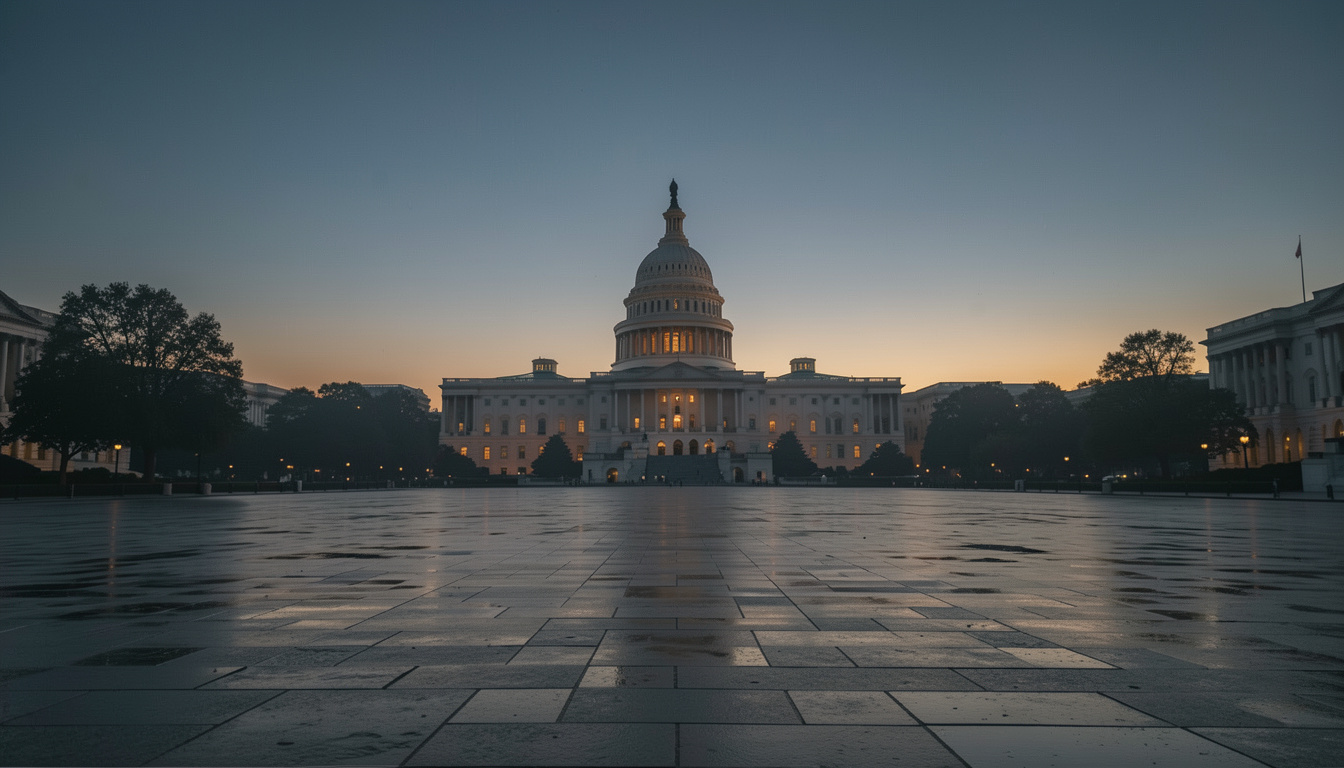
The midterm elections answered one question about the Iran war and opened another. Democrats won control of the House and the Senate on November 3, in an election where the war and its effect on fuel prices were central issues, and reports put the incoming Senate at 56 Democrats to 44 Republicans. But the new Congress is not seated until January 3, which leaves roughly six weeks in which the old Congress, the same president and the same commanders remain in place, and in which the war has not paused to wait for the transition.
The same Congress, a different mandate
The most concrete date in that window is December 11, when the stopgap spending measure that kept the government open expires. Congress returned for its lame-duck session on November 9 with that deadline ahead of it, and as of November 18 no agreement was in place. Some Democrats want to use the deadline to attach a restriction on funding for offensive operations against Iran. Senator Tim Kaine has said he wants such a provision added to the stopgap, and Representatives Yassamin Ansari and Ro Khanna have urged colleagues to reject any package that keeps paying for the war. Other Democrats are wary of the risk, since a lapse in funding on December 12 would mean a shutdown, and the senior appropriators Rosa DeLauro and Patty Murray have said they would prefer to find a way to end the war without one. Punchbowl News reported this week that Democrats had not yet settled on what language they would actually ask for.
On the other side, President Trump has continued to press the Senate for a $350 billion military funding package before Republicans lose their majority, and Senate Republicans have warned that something of that size could complicate a broader deal. So the first real test of what the election changed will come from a Congress that the voters have already replaced.
From January the picture shifts. Foreign Policy notes that Democrats will control the appropriations committees in both chambers, which draft the annual military and foreign aid spending bills, and will be able to use committee hearings for oversight of the war. The Council on Foreign Relations adds that Senate control gives them a say over national security nominees. Neither outlet suggests this guarantees Democrats their way. War powers resolutions have passed the House several times, and one failed in the Senate by a single vote in September, but a resolution that reaches the president's desk can be vetoed, and overriding a veto takes two-thirds of both chambers. The same logic applies to spending bills, which also need either the president's signature or a veto-proof majority.
On the water, the pace has not slowed
While Washington debates the calendar, attacks around the strait are running at the highest rate of the war. ABC News, drawing on UKMTO data, reports 31 attacks in and around the Strait of Hormuz in October and about 19 in November as of the 18th, compared with 53 incidents in total between March and September. The International Maritime Organization counts somewhat fewer, 34 confirmed in October and November so far, but still well above its roughly 50 for the seven months before.
The pattern of targets has changed as well. On November 8, Iran struck the Omani island of Didamar in the strait, an attack ABC verified through satellite imagery and video. Iranian state media described it as a strike on navigation aids it considers enemy systems, and Oman, a US partner, did not comment. ABC also reports that large tankers have drawn particular attention, including ships not attempting a transit at all. The supertanker Gem No. 2 had been anchored off the UAE for nearly five months when crew videos show it was hit by drones on October 9 and 10. The IRGC said the ship struck a mine on an unauthorized route, and a drone researcher consulted by ABC identified the wreckage as an Iranian Hadid-110. Iran continues to say it was a mine.
Analysts quoted by ABC read this as a response to the American workaround, in which smaller tankers cross with tracking switched off and transfer cargo to larger vessels on the far side. Sina Toossi of the Center for International Policy describes a cycle of adaptation and counter-adaptation, and Hamidreza Azizi of the International Crisis Group says Tehran now seems determined to make these arrangements more costly and less reliable. On Saturday the IRGC also said it had shot down a US MQ-9 drone over the strait, which it described as the 58th it has downed, a claim relayed by Iranian state media that we have not independently confirmed. It follows direct exchanges of strikes between the two countries earlier this week.
Measures of how much oil is actually moving remain contested, for the reasons set out in The Fog of Hormuz: figures that look contradictory often count different things over different windows. A US official told the Jerusalem Post that 28 million barrels passed through the strait on Wednesday, which the official described as higher than before the war. Kpler's preliminary estimate for the week to November 11 was about 8.3 million barrels a day, roughly 48 percent of its pre-war level, on a measure that includes ship-to-ship transfers in the Gulf of Oman and excludes Iranian oil, and the IMF's PortWatch tracker recorded two transits on November 15 against a pre-crisis baseline of about 85 a day. The attack counts above carry the same caveat, since UKMTO, the IMO and other trackers count different windows and types of incident. Trump has said the military campaign is effectively over and that Navy escorts are working. Brent settled at $92.57 on Friday.
A window, read differently
The reporting suggests that several parties see this period as a window, though each for different reasons. The New York Times reported on November 18 that Trump is weighing another round of extensive strikes, with Prime Minister Netanyahu pressing for a joint American-Israeli air campaign lasting four to seven days against what Israeli officials describe as a rebuilt missile and drone arsenal. According to the report, Trump has not decided, administration officials are divided over how reliable the underlying intelligence is, and skepticism has grown since the elections. The president is also said to be weighing whether the US has a limited window to act. That would be a change from October 9, when, as we noted at the time, Trump said there would be no attack before the midterms while the blockade continues. The Pentagon has meanwhile built up its forces in the region, including bombers on 96-hour notice. An Israeli official rejected the characterization that Netanyahu was pressuring Trump, and a spokesperson for his office said he has acted to safeguard Israel's security. Israeli proposals reportedly also include wider strikes on energy infrastructure, which Trump has not approved.
Iran's position, restated on Friday by Foreign Minister Abbas Araghchi, is that its seven conditions must be implemented before the strait reopens, among them an end to the war and the lifting of sanctions and of the naval blockade on its southern ports. He described the timetable as flexible, said talks would depend on American confidence-building measures, and ruled out sending its stockpile of 60 percent enriched uranium abroad. Trump told reporters the same day that Tehran wants a deal but not one that is acceptable to him, and that he is seeking a genuine agreement rather than a sham one. Vice President Vance, who has previously blamed the war for Republican losses, said the decision to attack in February was the president's call. The Treasury also announced new sanctions on four Iranians it says collected oil revenue for Tehran.
What to watch
The calendar offers a few fixed points, and everything else depends on decisions that have not been made.
- December 11: the funding deadline, and the first test of whether Democrats attach Iran language to it, or whether they wait.
- Any presidential decision on strikes, which the Times reports is still open and which would likely raise the risk of Iranian retaliation against Gulf shipping and energy infrastructure.
- The monthly attack count: whether the October and November pace is sustained or recedes.
- January 3: when the new Congress is seated and its committees, rather than its caucuses, begin to set the terms.
The election did change the political arithmetic in Washington. What it has not yet changed is the situation on the water, or the fact that for the next six weeks the people who decide what happens there are the same ones who did before it.
Sources:
- Iran's IRGC downs US drone over Hormuz as efforts to end war remain stalled, Al Jazeera, November 21, 2026
- Strait of Hormuz attacks have increased to highest level since Iran war began, ABC News, November 21, 2026
- Fight over funding for Iran war could put the government at risk of a shutdown, NPR, November 20, 2026
- Netanyahu urges Trump to join four- to seven-day air campaign against Iran, report says, i24NEWS, citing The New York Times
- Report: Netanyahu pressing Trump to join new four-to-seven-day assault on Iran, Israel National News, citing The New York Times
- Netanyahu Presses Trump for Four-to-Seven-Day Campaign Against Iran, NYT Reports, News Beep, citing The New York Times
- 5 takeaways as lame-duck defense fights heat up, The Hill, November 13-15, 2026
- Top funding issues to watch in the lame duck, Punchbowl News, November 17, 2026
- Republicans Have Six Weeks Left in Charge. Buckle Up., Slate
- Where Democrats Can Thwart Trump's Foreign Policy, Foreign Policy, November 4, 2026
- Democrats Win Control of Congress. Here's How That Could Affect U.S. Foreign Policy, Council on Foreign Relations
- Democrats Could Challenge Trump's Iran War After Midterm Sweep, International Business Times
- Final 2026 midterm election results: Democrats clinch 56-seat Senate majority, Yahoo News
- Iran using deadlier missiles to target ships in Strait of Hormuz, US source tells Post, Jerusalem Post, November 19, 2026
- Strait of Hormuz Oil & LNG: How Much Flows Now vs Before the War, hormuz.now, citing Kpler
- Strait of Hormuz Latest: Tanker Struck Near Oman as Traffic Stays Far Below Normal, IBTimes Australia
- Oil Rose Into The Weekend As Hormuz Risks Returned, Finimize
- The Fog of Hormuz: Every Number in This War Has a Footnote, Hormuz Strait Monitor, October 13, 2026
See the numbers in real time
Track oil prices, ship transits, insurance premiums, and strait status — updated every hour.