The Fog of Hormuz: Every Number in This War Has a Footnote
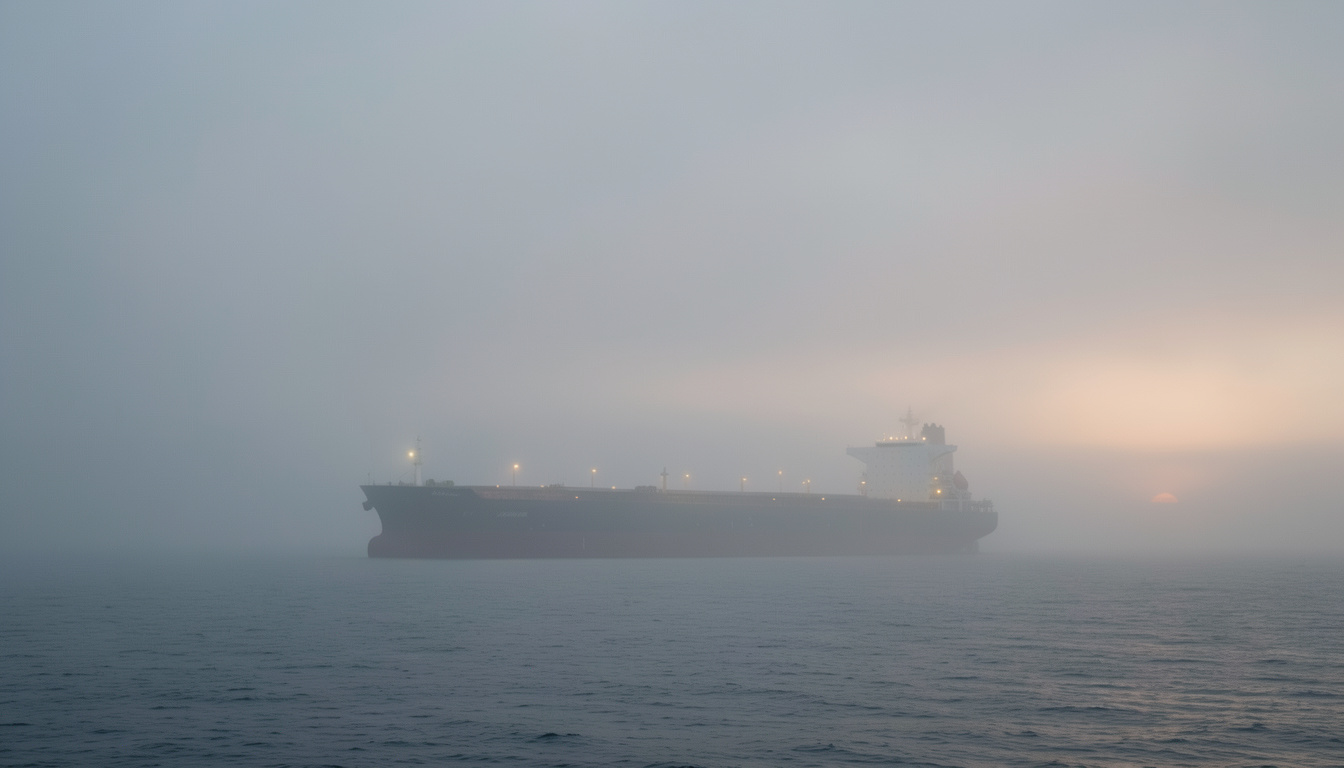
A week ago, the story was that Gulf oil had come back. Kpler reported crude and condensate leaving the Gulf at 16.5 million barrels per day in September, matching the pre-war average once Iran is excluded. Then came a different set of Kpler numbers. A wire report published by AAP on October 8 said crude crossing the Strait of Hormuz had fallen 27 percent in a week from a wartime high, to at least 10.1 million barrels per day, while overall Middle East crude exports stayed at pre-war levels. Three days later, Al Jazeera, also citing Kpler, put crude transit through the strait at an average of 8.5 million barrels per day in the week to October 7, about 40 percent below normal, after flows had exceeded pre-war levels at the start of the month.
All of these can be right. The 16.5 million figure counts everything leaving the Gulf, including oil that bypasses the strait by pipeline. The others count what physically crossed the strait, in different weeks and possibly with different cut-offs: "at least" 10.1 million in one report, an 8.5 million average in the other. A reader who saw only one headline came away with a different picture of the war than a reader who saw another.
That is the pattern this post is about. In this war, almost every number comes with a window, a scope and a definition, and the headline usually drops all three. Here is how that plays out in four places.
Ships hit: who is counting, and what counts
Ship attacks are the number readers see most. UKMTO, the UK maritime security centre, is the usual source, and it is careful: its notices tend to say a vessel was struck by an "unknown projectile," not who fired it. Even so, the totals do not line up neatly.
- Al Jazeera reports UKMTO counting nine attacks on tankers in the Strait in the first days of October, equal to half of September's total for the waterway and the Gulf combined. That implies roughly 18 in September.
- A Maritime Executive summary of UKMTO's tally describes 15 or 16 incidents "since September," a dozen of them in recent days, and 59 since July, of which 41 involved commercial shipping in the strait.
- Al Jazeera also reports at least 12 ships attacked in the week to October 5, the highest weekly count of the war.
- The shipping-security firm Windward counts a dozen vessels struck in the recent wave, 11 of them tankers, all transiting the southern channel near Oman with their tracking transponders switched off.
- Kpler's count of commodity vessels crossing the strait fell to 7 on Tuesday October 6, the lowest since July 23, against about 125 large commercial vessels a day before the war. Kpler's counts exclude vessels with transponders switched off, and Windward says the recently attacked ships were transiting with theirs off.
- Maritime Executive says the October 7 strike on the tanker ST1 off Oman pushed the International Maritime Organization's war-related count past 100.
These figures may differ because of the date window, whether the count covers the Strait only or the wider Gulf, and whether it includes all vessels or only commercial ones. Some are also secondhand paraphrases. We could not reconcile them, and we are not sure anyone outside UKMTO could.
Attribution is a second layer. When Iran's Revolutionary Guard claims a strike, the claim has not always held. On August 31 it said two tankers had hit naval mines on an "unauthorised route," and CENTCOM called that false. On October 9 it claimed a strike on the LPG tanker NV Sunshine, and the ship's owner said the vessel was operating normally. On October 10 it said an unnamed crude supertanker hit a mine and caught fire. On October 12 it said it had struck three supertankers in two days, and we have not seen independent confirmation. Meanwhile, the VLCC Gem No. 2 was struck inside the Gulf on October 9 and no one claimed it.
So the honest breakdown of any incident count is three groups: confirmed by a neutral source such as UKMTO or the ship's owner, claimed by one party, and unclaimed. A count that blends the three is a count of reports, not of attacks.
Barrels: three definitions of "back to normal"
The oil figures show the same problem. Kpler's 16.5 million barrels per day measures Gulf crude exports excluding Iran. Reuters, also using Kpler data, put the recovery nearer 81 percent. JPMorgan put it at 98 percent. The new 8.5 million figure is a different thing again: crude crossing the strait.
The difference is the bypass. Kpler says about 40 percent of Gulf crude now avoids Hormuz, up from 17 percent before the war, mostly through Saudi Arabia's East-West pipeline to the Red Sea and the UAE's line to Fujairah. Kpler's analysts say exports from the Gulf of Oman coast and the Red Sea rose to 6.7 million barrels per day, more than double the pre-war level, offsetting the drop at Hormuz. When the strait is under pressure, total exports can hold up while transit through it falls. When the bypass is under pressure as well, which is what happened when the pipeline was hit in September and again on October 5, exports can fall too.
Asking "is oil flowing again?" is therefore a question with at least three honest answers: out of the Gulf, through the strait, or into your fuel tank. US diesel was $6.28 a gallon on October 9, close to the $6.53 record set in September. Brent, which dipped to about $103 after a Trump post that day, was back above $105 on October 12, a two-week high.
Troops: the count that moved
The US casualty count is the clearest case of a number that has changed because of the way it is kept, not only because of events.
The Pentagon's casualty database, updated late on October 9 for the first time since September 29, now lists 21 US personnel dead and 865 wounded. The previous figures were 19 dead and 861 wounded. The total includes non-hostile deaths, such as six airmen killed in a tanker aircraft crash and a Navy pilot killed in a helicopter crash.
The path to that figure was not straight. In July the Pentagon lowered the death toll from 18 to 14 and removed dozens of wounded from the tally, attributing it to "temporary data disruptions." Soon after, the database began recording casualties after July 7 under a new heading, "Overseas Operations," which makes the totals harder to compare with earlier figures. The administration's argument that the first phase of the war ended in July also affects the War Powers clock, which is why the labelling is more than a bookkeeping detail.
The latest change shows the problem. The two added deaths are both non-hostile. One is a New York Army National Guard major who died of a medical emergency at Camp Buehring, Kuwait, on March 6. The military announced his death at the time, but it had not been counted in the Iran war toll until now. The other is a Navy servicewoman who died in September. A defense official told Task & Purpose that additional Middle East deaths were "not directly related to the war with Iran," yet they were added to the war toll, and the report does not reconcile the two. The update also disclosed, for the first time, five soldiers wounded in action in October.
Earlier, in September, the database had added 37 wounded, 29 sailors and 8 Marines, without a disclosed attack to explain them. The Washington Post separately reported that more deaths in the region were not reflected in the database, and Defense Secretary Pete Hegseth disputed that report.
Words: claims as signals
The last kind of fog is the statements themselves, which are often aimed at an audience more than at the facts. President Trump said on October 6 that the war was "essentially over." On October 9 he said the US would not attack Iran before the November 3 midterms while the blockade stays in force, and also that Iran must "give us everything, or they don't exist any longer." On October 11, Iran's Supreme National Security Council head Mohsen Rezaei called the latest US response "insufficient," said Tehran was no longer responding, and also said the US had accepted some of Iran's seven conditions. On October 13, the Iranian side said it was still reviewing the US response and that mediated talks were continuing.
Each of those statements can be accurate on its own terms and still point in a different direction. Reading them as claims about intent, not as reports of events, is more useful. The pledge not to attack before the midterms is a statement about the calendar. Rezaei's threat to "cables, data centers, AI facilities" if intense fighting resumes is a statement about escalation risk. Neither tells you what the talks will produce, and Al Jazeera's reading is that no breakthrough is expected before the midterms or Israel's October 27 election.
Numbers get the same treatment. Trump has put Iranian inflation near 300 percent, while Al Jazeera cites about 70 percent on a 12-month average. We could not verify the first figure.
How we try to handle it
Everything on this site is built from these same sources, so it inherits the same fog. A few rules help.
- Every entry has a date and a source. If a source gives a different date than another, we say so in the entry.
- Claims are labelled as claims. An IRGC statement is logged as the IRGC's statement, not as an established event. Where a ship's owner denies it, the entry says so.
- Unknown means unknown. Our vessel log uses an "unknown" attacker whenever no one has claimed or established responsibility, which is more often than the headlines suggest.
- Totals are labelled by what they count. Our vessel-incident count is a count of logged reports, and some of them are unconfirmed.
The most useful habit for any reader is to ask three questions before trusting a number: who counted, over what period, and by what definition. When a headline does not answer those, assume the footnote is doing important work.
What to watch
The next Kpler transit figure will show whether last week's drop was a blip or the start of a trend. UKMTO's next weekly tally, and how Windward and the IMO compare with it, will say how consistent the ship-attack counts are. And the Pentagon database will show whether its next change comes from events or from reclassification, as this week's did.
Sources
- Al Jazeera, Oct 11: Hormuz attacks intensify as efforts to end war on Iran stall
- AAP wire report (Kpler data), Oct 8: Hormuz shipping transits at lowest in over two months
- Task & Purpose, Oct 10: Pentagon raises Iran war death toll to 21
- Al Jazeera, Oct 8: Tanker hit by multiple projectiles off north coast of Qatar, UKMTO says
- The Maritime Executive, Oct 9: More tankers struck as IRGC expands threat against non-compliant vessels
- Seatrade Maritime, Oct 9: Iran threatens wider tanker attacks as VLCC struck in Gulf
- CBS News live updates, Oct 9–11: Iran war live updates
- Euronews/AFP (Kpler data), Oct 5: Gulf crude exports return to pre-war levels, excluding Iran
- Newsweek, Sept 23: Pentagon reveals 19th US troop death linked to Iran war
- Washington Post via DNyuz, Sept 26: Pentagon quietly adds dozens to tally of troops wounded amid Iran war
- ABC News, Jul 26: Pentagon quietly updates how it categorizes Iran war casualties
- Task & Purpose, Jul 26: Iran war US troops casualty numbers
- Al Jazeera, Sept 30: Is Iran losing its leverage over the Strait of Hormuz?
See the numbers in real time
Track oil prices, ship transits, insurance premiums, and strait status — updated every hour.