What Happens If the Strait of Hormuz Is Blocked?
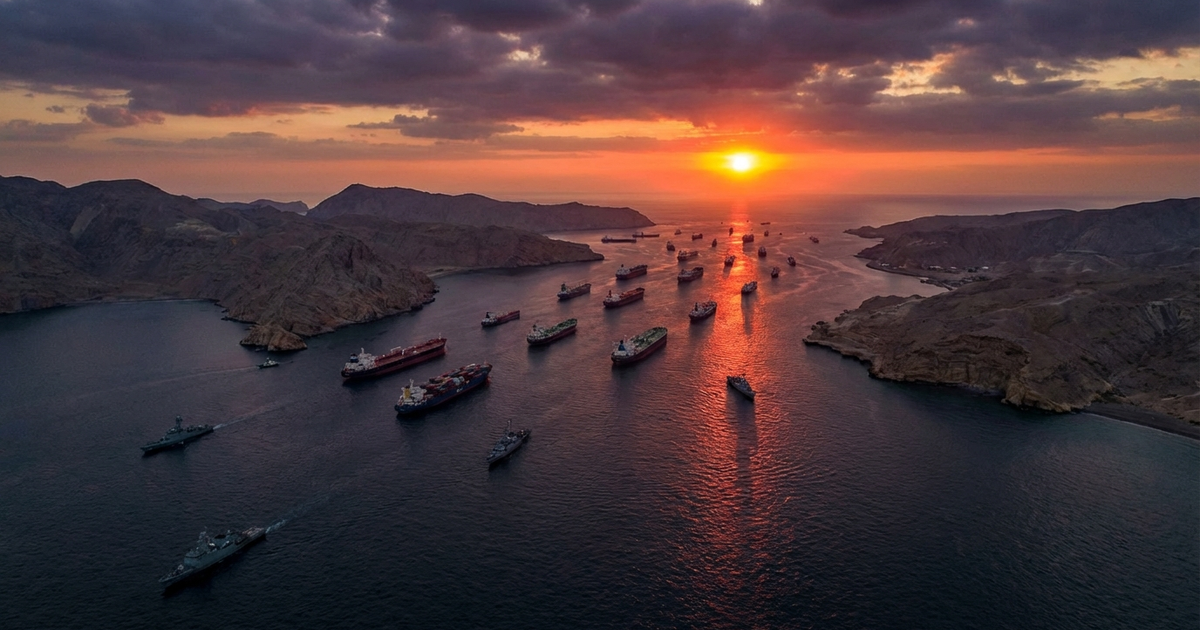
The Strait of Hormuz is a 33-kilometer-wide passage between Iran and Oman. On a normal day, roughly 60 vessels pass through carrying about 20 million barrels of crude oil — around one-fifth of the world's daily consumption. When this chokepoint is blocked, the consequences ripple across every economy on Earth.
The first 24 hours
Oil futures react before the first tanker turns around. Brent crude — the global benchmark — typically spikes 10–20% within hours of a credible closure. In 2019, a single drone strike on Saudi Aramco's Abqaiq facility caused a 15% single-day jump, and that attack didn't even close the strait.
Traders don't wait for physical shortages. They price in the expectation of shortage, which means prices move immediately. By the end of day one, every gas station in the world is watching the same futures curve.
Week one: the scramble begins
Within the first week, several things happen simultaneously:
Strategic petroleum reserves get tapped. The International Energy Agency coordinates releases from member nations' reserves. The US Strategic Petroleum Reserve holds roughly 370 million barrels — enough to replace Hormuz flows for about 18 days, but the release rate is limited to about 4.4 million barrels per day.
Ships reroute via the Cape of Good Hope. Tankers that would normally transit the strait head south around Africa instead. This adds 10–15 days to European deliveries and 5–8 days to Asian ones. The problem: the global tanker fleet doesn't have enough spare capacity to absorb those extra sailing days, so effective shipping capacity drops even if the oil itself still exists.
Pipelines ramp up. Saudi Arabia's East-West Pipeline (Petroline) can move about 5 million barrels per day to the Red Sea port of Yanbu, bypassing Hormuz entirely. The UAE's ADCOP pipeline adds another 1.5 million barrels per day to the Gulf of Oman. Combined, these pipelines can bypass roughly a third of normal Hormuz throughput — helpful, but far from sufficient.
The LNG crisis nobody talks about
While oil gets the headlines, liquefied natural gas may be the bigger problem. Qatar — the world's largest LNG exporter — ships 100% of its output through the Strait of Hormuz, and there is no pipeline bypass for LNG. When the strait closes, roughly 25% of global LNG trade disappears instantly.
For countries like Japan and South Korea, which depend on LNG for power generation and heating, this is an existential energy crisis. There are no quick substitutes. Unlike oil, LNG requires specialized infrastructure at both ends — liquefaction plants, cryogenic tankers, and regasification terminals. You can't just pipe it somewhere else.
One month in: price destruction
If the closure lasts beyond a few weeks, oil prices don't just rise — they rise until demand is destroyed. This means:
-
Developing nations get priced out. Countries with weaker currencies and less purchasing power simply can't afford oil at $150+ per barrel. Industries shut down, transportation networks collapse, and food prices spike as fertilizer and distribution costs soar.
-
Recession indicators flash red. Every major oil shock in history — 1973, 1979, 1990 — triggered a global recession. A Hormuz closure would be the largest supply disruption ever, removing roughly four times more oil from the market than the 1973 Arab embargo.
-
Strategic reserves run low. Even the largest reserves (US, China, Japan, EU) are designed for disruptions lasting weeks, not months. By day 30, the buffer is thinning and the diplomatic pressure to resolve the crisis becomes overwhelming.
Who gets hit hardest?
The impact varies dramatically by region:
Critical exposure: Japan and South Korea import 80–90% of their oil through Hormuz. They have substantial strategic reserves (175 days and 90 days respectively) but no domestic production to fall back on.
High exposure: India and China are large importers with growing Hormuz dependency. Both have been building reserves and diversifying suppliers, but can't fully offset a closure.
Moderate exposure: The European Union gets about 15–20% of its oil through Hormuz, but the price impact is global — EU consumers pay more regardless of where their specific barrels come from.
Indirect exposure: The United States produces most of its own oil but is fully integrated into the global market. When Brent rises, WTI follows. American consumers see higher prices even though relatively few US-bound barrels transit Hormuz.
The bottom line
A Strait of Hormuz closure is not a regional event — it's a global economic shock. The physical infrastructure to bypass it exists but can only handle about half the normal flow. Strategic reserves buy time but not a solution. And the LNG dimension means the impact extends well beyond oil into electricity, heating, and industrial production.
The longer a closure lasts, the more the costs compound. Every historical Hormuz-related crisis has been resolved diplomatically, because the economic costs of a prolonged closure are simply too high for any party to sustain.
See the numbers in real time
Track oil prices, ship transits, insurance premiums, and strait status — updated every hour.