Which Countries Depend Most on Strait of Hormuz Oil?
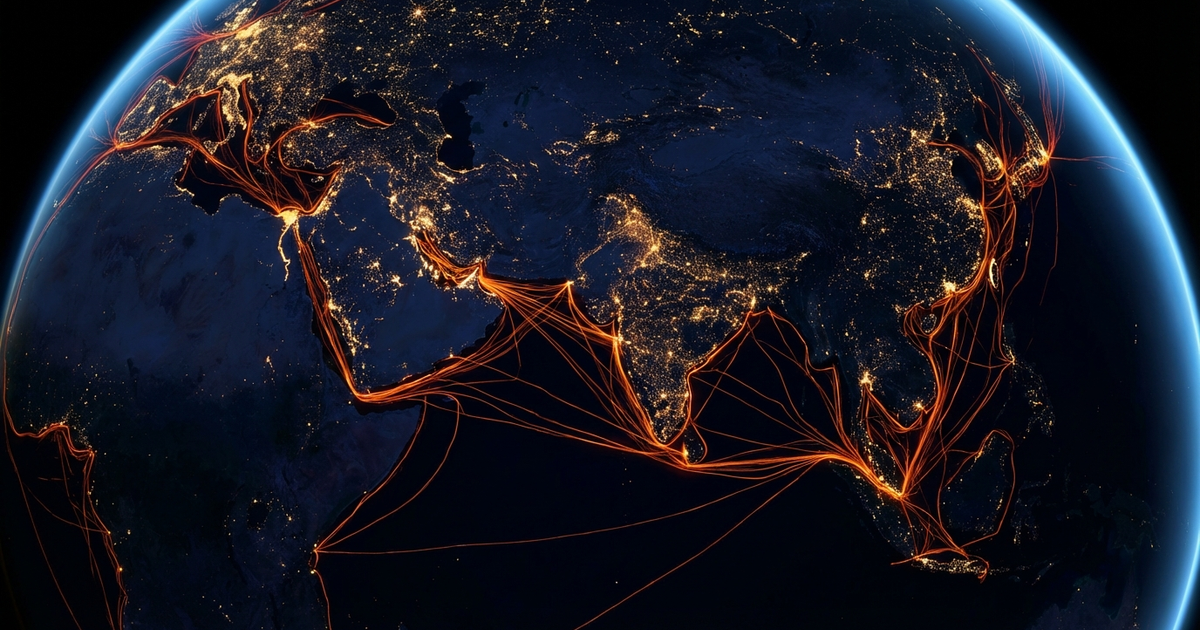
Not every country is equally exposed when the Strait of Hormuz is disrupted. While the price impact is global — oil is a fungible commodity priced on world markets — the physical supply impact depends on how much of a nation's oil actually transits the strait. Here's a ranked look at who is most vulnerable.
Tier 1: Critical dependency (80%+ of oil via Hormuz)
Japan
Japan is the world's fourth-largest oil consumer but produces almost none of its own. Roughly 85–90% of Japanese oil imports pass through the Strait of Hormuz, sourced primarily from Saudi Arabia, the UAE, Kuwait, and Qatar.
After the 2011 Fukushima disaster shut down most of Japan's nuclear fleet, the country became even more dependent on imported fossil fuels — both oil and LNG. Japan holds one of the world's largest strategic petroleum reserves at roughly 175 days of net imports, which provides a substantial buffer. But reserves are a stopgap, not a solution.
Japan has been actively diversifying suppliers, increasing imports from Russia, Africa, and the Americas, but Middle Eastern oil remains dominant due to geography and long-term contracts.
South Korea
South Korea imports virtually all of its oil, with roughly 70–80% transiting the Strait of Hormuz. The country is also the world's second-largest LNG importer, with about 30–35% of its LNG coming from Qatar — all of which passes through the strait.
South Korea maintains a strategic reserve of about 90 days. Its industrial economy — semiconductors, shipbuilding, petrochemicals, automobiles — is highly energy-intensive, making it disproportionately affected by oil supply disruptions.
Tier 2: High dependency (40–70% of oil via Hormuz)
India
India is the world's third-largest oil consumer and imports about 85% of its crude. Of those imports, roughly 55–65% transit the Strait of Hormuz. Iraq, Saudi Arabia, and the UAE are India's top suppliers.
India's strategic petroleum reserve is relatively small at about 10 days of consumption, though it's being expanded. The country has been diversifying by increasing imports from Russia (which surged after Western sanctions in 2022) and Africa. India's refining sector — the fourth largest in the world — processes crude for re-export, meaning a Hormuz disruption would also affect India's fuel export revenue.
China
China is the world's largest oil importer, but its Hormuz exposure is lower than Japan or South Korea because it imports significant volumes from Russia, Central Asia, West Africa, and Brazil — none of which transits the strait. Roughly 40–50% of Chinese oil imports come through Hormuz.
China has been building its strategic petroleum reserve aggressively, with estimates ranging from 500 to 950 million barrels. It also has pipeline imports from Russia (ESPO pipeline) and Central Asia (Kazakhstan-China pipeline) that bypass maritime chokepoints entirely.
Still, 40–50% of the world's largest import stream is an enormous absolute volume. China would feel a Hormuz closure acutely despite its diversification efforts.
Tier 3: Moderate dependency (15–40% of oil via Hormuz)
European Union
The EU imports roughly 15–20% of its oil through the Strait of Hormuz, primarily from Saudi Arabia, Iraq, and the UAE. Europe has more diversified supply sources than Asia — North Sea, Norway, Africa, the Americas, and (formerly) Russia — which reduces its direct Hormuz exposure.
However, the EU is highly exposed to the price impact of a Hormuz disruption. Even if European-bound barrels don't transit the strait, the global price spike means European consumers and industries pay significantly more.
The EU also has growing LNG exposure via Qatar. After pivoting away from Russian pipeline gas in 2022, Europe signed major long-term LNG contracts with Qatar and the UAE, increasing its indirect Hormuz dependency.
Southeast Asia
Thailand, Singapore, and the Philippines import moderate shares of their oil through Hormuz. Singapore is a major refining hub that processes Gulf crude for regional distribution. Overall, the region's Hormuz dependency sits around 15–25% of oil imports.
Tier 4: Low direct dependency but high price exposure
United States
The US produces roughly 13 million barrels of oil per day — more than any other country — and imports relatively little from the Persian Gulf. Direct Hormuz dependency is minimal, perhaps 5–10% of imports.
But the US is fully integrated into global oil markets. When Brent rises, West Texas Intermediate follows. American consumers pay more at the pump regardless of where their specific barrels originate. The US economy's sensitivity to oil prices means a Hormuz closure would likely push the country toward recession, even without a physical supply shortage.
Australia
Australia imports about 90% of its oil (despite being a major LNG exporter), but most comes from Southeast Asian refineries rather than directly through Hormuz. The indirect exposure exists through the global price channel and through its Asian trading partners' vulnerability.
What determines vulnerability?
Several factors beyond import share affect how badly a country suffers:
Strategic reserves. Japan's 175-day reserve gives it far more breathing room than India's roughly 10-day buffer.
Domestic production. The US and China can partially self-supply. Japan and South Korea cannot.
Pipeline alternatives. Countries with overland pipeline imports (China from Russia, Europe from Norway) have non-maritime options.
Economic structure. Energy-intensive industrial economies (South Korea, Japan) suffer more than service-dominated ones.
Refining capacity. Countries with large refining sectors (India, Singapore) lose both input supply and export revenue simultaneously.
The takeaway
A Strait of Hormuz disruption is often framed as a Middle East problem, but the countries that suffer most are in East Asia. Japan and South Korea are the world's most Hormuz-dependent major economies, with limited alternatives and high energy intensity. The price impact, however, respects no borders — a Hormuz closure makes oil more expensive for everyone, everywhere.
See the numbers in real time
Track oil prices, ship transits, insurance premiums, and strait status — updated every hour.